


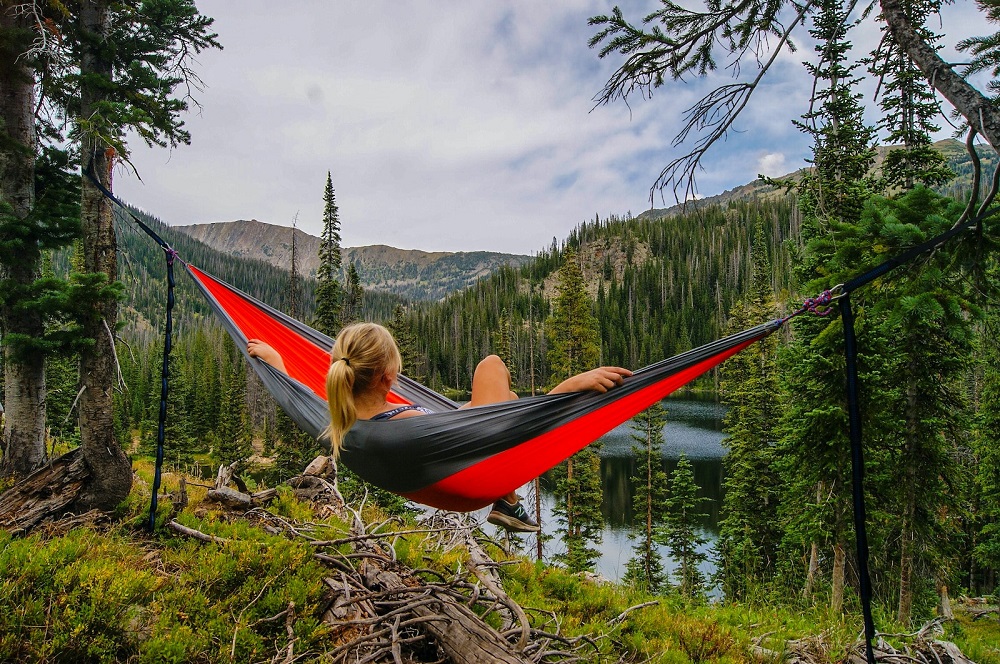
The modern world operates at an intense, hyper-connected pace that often leaves individuals feeling detached from the physical planet. For many, daily life is bounded by concrete highways, digital interfaces, and indoor office environments. This urban confinement has fueled a powerful global movement toward nature tourism. True nature enthusiasts do not just travel to escape their routine; they travel to immerse themselves in pristine ecosystems, witness raw geological forces, and observe wildlife in native habitats.
Selecting the perfect destination requires moving past generic holiday resorts and seeking out regions where conservation takes priority over commercialization. From the mist-shrouded volcanic peaks of Central America to the dense, primeval temperate rainforests of the Pacific Northwest, the world harbors specific ecological sanctuaries that offer profound sensory experiences. These destinations provide an active antidote to modern exhaustion, allowing travelers to recalibrate their internal rhythms against the timeless backdrop of the natural world.
Costa Rica: The Global Capital of Biodiversity
Positioned as a thin land bridge between North and South America, Costa Rica represents a masterclass in environmental stewardship and biological density. Despite occupying less than zero point zero three percent of the earth’s total surface area, this small Central American nation sustains nearly six percent of the planet’s verified biodiversity.
Costa Rica is unique because its government made a conscious socioeconomic pivot decades ago, dismantling its military force and reinvesting national capital into the creation of an impenetrable network of national parks, biological reserves, and wildlife corridors. Today, more than twenty-five percent of the country’s land mass is permanently protected from industrial development.
Nature enthusiasts exploring this volcanic territory can transition between highly distinct microclimates within a single afternoon:
-
Cloud Forest Ecosystems: In high-altitude zones like Monteverde, travelers walk along suspension bridges suspended inside a perpetual canopy of moisture-rich fog. This unique environment hosts thousands of epiphytic plant species, rare orchids, and the elusive resplendent quetzal bird.
-
Coastal Rainforest Networks: In regions like Corcovado National Park on the Osa Peninsula, the jungle collides directly with the Pacific Ocean. National Geographic has designated this specific park as one of the most biologically intense places on Earth, where hikers can witness scarlet macaws, tapirs, and all four native species of monkeys coexisting in a single unbroken habitat.
-
Active Volcanic Landscapes: The Arenal and Tenorio regions display the raw geological youth of the country, featuring thermal hot springs, active tectonic vents, and brilliant turquoise rivers colored by natural volcanic mineral sediment.
The Pacific Northwest: Splendor in the Temperate Rainforest
When travelers imagine a rainforest, their minds typically drift toward equatorial jungles. However, some of the most structurally complex, carbon-dense, and majestic forests on earth are found in the temperate zones of the Pacific Northwest, stretching across the state of Washington and up into British Columbia.
At the heart of this region sits the Olympic Peninsula, an isolated ecological pocket bounded by the Pacific Ocean, the Strait of Juan de Fuca, and the towering, glacier-capped Olympic Mountains. Because the mountains force incoming ocean storms to drop their moisture abruptly, the western valleys of the peninsula receive up to one hundred and forty inches of rain annually, creating a cathedral-like ecosystem found nowhere else in North America.
Walking into the Hoh Rainforest feels like stepping backward into a prehistoric era. Massive Sitka spruce and Western hemlock trees, some reaching over two hundred and fifty feet in height and living for centuries, dominate the landscape. Every square inch of the forest floor and tree bark is upholstered in a dense carpet of velvet-green mosses, lichens, and ancient ferns. The dense vegetation creates a natural acoustic buffer, resulting in a profound, spiritual silence that allows hikers to spot Roosevelt elk herds grazing along glacial riverbeds.
Iceland: The Dynamic Forge of Fire and Ice
For nature enthusiasts who prefer raw, untamed geological drama over dense foliage, Iceland stands as an unparalleled open-air museum of earth sciences. Situated directly on top of the Mid-Atlantic Ridge, where the North American and Eurasian tectonic plates are actively pulling apart, this island nation is a living forge of continuous planetary creation.
Iceland is a landscape defined by extreme elemental contrast. It is a place where Europe’s largest ice caps sit directly on top of highly volatile volcanic systems. This structural tension results in a surreal, alien landscape that challenges traditional definitions of natural beauty.
A journey through the Icelandic interior reveals nature operating on a monumental scale. Travelers can stand beside the roaring falls of Dettifoss, the most powerful waterfall in Europe, where hundreds of thousands of gallons of muddy glacial runoff plunge into a stark canyon every second. Further south, the Jokulsarlon glacier lagoon displays massive, electric-blue icebergs breaking off from the Vatnajokull ice cap and drifting silently toward the Atlantic Ocean, where they wash up onto black volcanic sand beaches like polished diamonds. The lack of trees and vast horizons amplify the scale of the earth, forcing a profound perspective change regarding human significance within the cosmic timeline.
New Zealand: Isolation and Evolutionary Eccentricity
The natural splendor of New Zealand’s South Island is rooted in its extreme geographical isolation. Having separated from the supercontinent of Gondwana roughly eighty million years ago, the islands developed an evolutionary trajectory entirely independent of the rest of the world, resulting in unique flora and fauna that exist nowhere else on earth.
The South Island is dominated by the Southern Alps, a dramatic mountain range pushed skyward by the collision of the Pacific and Australian tectonic plates. This alpine spine creates a stunning topography of deep fjords, turquoise glacial lakes, and ancient beech forests that cling to steep rock walls.
The crown jewel of this wilderness is Fiordland National Park, a remote sanctuary incised by fourteen distinct sound structures carved by ancient ice sheets. Exploring Milford Sound or the even more isolated Doubtful Sound allows nature enthusiasts to witness vertical rock faces rising thousands of feet straight out of dark, ink-black water. Permanent and temporary waterfalls cascade down these sheer cliffs, fed by intense regional rainfall. Because human development has been strictly limited by the vertical terrain, the air and water quality remain pristine, supporting rare wildlife populations including fur seals, penguins, and bottlenose dolphins.
Frequently Asked Questions
What is the specific ecological definition of a temperate rainforest?
A temperate rainforest is a unique forest classification characterized by its location in mid-latitude regions that experience moderate temperatures rather than equatorial heat. To qualify, an ecosystem must receive a minimum of fifty-five inches of rain annually, possess a closed canopy that shades the forest floor, and experience a relatively cool growing season. These parameters allow for the accumulation of massive biological mass, resulting in trees that grow slower but much larger and live significantly longer than their tropical counterparts.
Why do volcanic rivers in places like Iceland and Costa Rica exhibit brilliant blue colors?
The striking turquoise and blue colorations observed in specific volcanic rivers, such as the Rio Celeste in Costa Rica or the glacial rivers of Iceland, are caused by a natural optical phenomenon known as Mie scattering. As volcanic vents or melting glaciers feed into the rivers, they introduce high concentrations of specific microscopic mineral particulates, including aluminosilicates, sulfur compounds, and silica dust. These tiny particles remain suspended in the flowing water, reflecting and scattering only the blue spectrum of sunlight back to the human eye.
How does geographic isolation cause the unique wildlife structures found in New Zealand?
Because New Zealand broke away from larger landmasses before mammalian predators evolved, the islands became an evolutionary sanctuary dominated entirely by birds, insects, and reptiles. In the absence of ground-dwelling predators, avian species expanded into ecological niches typically occupied by mammals, resulting in the development of flightless birds like the kiwi, kakapo, and takahe. This lack of natural defense mechanisms makes these unique species highly vulnerable to introduced modern predators, requiring intense conservation management.
What is the concept of leave no trace tourism and why is it vital for nature destinations?
Leave no trace tourism is a framework of seven environmental principles designed to minimize human impact on wild spaces. These tenets include planning ahead, traveling and camping exclusively on durable surfaces, disposing of waste properly, leaving discovered natural objects untouched, minimizing campfire impacts, respecting native wildlife populations, and maintaining courtesy toward other visitors. Adhering to these rules prevents trail erosion, avoids habitat fragmentation, and ensures ecosystems remain intact for future generations.
What is the best season to visit Iceland if your primary goal is experiencing geology and hiking?
For hiking and geological exploration, the optimal window is the summer season, specifically from late June through August. During this short seasonal window, the snow melts from the mountainous interior, allowing access to the remote F-roads and hiking trails of the Highlands, such as Landmannalaugar. Summer also delivers nearly twenty-four hours of daylight, giving nature enthusiasts endless time to explore remote waterfalls and volcanic craters without the hazard of severe arctic winter storms.
How do cloud forests differ from traditional lowland tropical rainforests?
Cloud forests differ from lowland rainforests primarily through altitude, temperature, and moisture delivery mechanics. Found at elevations typically ranging from three thousand to ten thousand feet, cloud forests are much cooler and characterized by a persistent, low-level canopy of fog and mist. Instead of relying solely on rainfall, these forests extract moisture directly from the passing clouds as the water condenses on the leaves of mosses and epiphytes, a hydrological process known as horizontal precipitation.
Comments are closed.