


Seafood is one of the most sensitive food categories to handle, because freshness, safety, temperature control and presentation all affect the final customer experience. For producers, retailers and foodservice suppliers, seafood packaging solutions play an important role in protecting quality, supporting shelf life, reducing waste and helping products move efficiently through the supply chain.
Packaging Protects Product Quality
Seafood can be affected by temperature, moisture, oxygen exposure and handling at every stage from processing to retail. Packaging helps create a protective barrier, reducing the risk of contamination, damage or quality loss during storage and transport.
The right format depends on the product. Fresh fish, frozen seafood, ready-to-eat products, canned seafood and chilled prepared meals all have different packaging requirements. Some need strong moisture resistance, while others need protection from freezer burn, oxygen exposure or physical damage.
Good packaging should support the product’s condition until it reaches the customer. If seafood arrives looking poor, leaking, damaged or difficult to store, confidence can be affected even when the product itself started at a high standard.
Shelf Life and Food Safety Are Closely Linked
Shelf life is a major consideration in seafood packaging. Products may need to travel across long distances, pass through several storage points and remain safe for consumers within a defined period. Packaging must work alongside temperature control, processing standards and hygiene systems to maintain quality.
For chilled and frozen seafood, packaging needs to support cold chain management. For canned or shelf-stable seafood, sealing, durability and processing compatibility are essential. Any weakness in packaging can create safety risks, waste and commercial loss.
Clear date coding, storage instructions and product information are also important. Customers, retailers and distributors all need to understand how the product should be handled.
Sustainability Is Becoming More Important
Food packaging is under increasing scrutiny, and seafood is no exception. Businesses are looking for ways to reduce unnecessary plastic, improve recyclability, use materials more efficiently and lower waste without compromising safety.
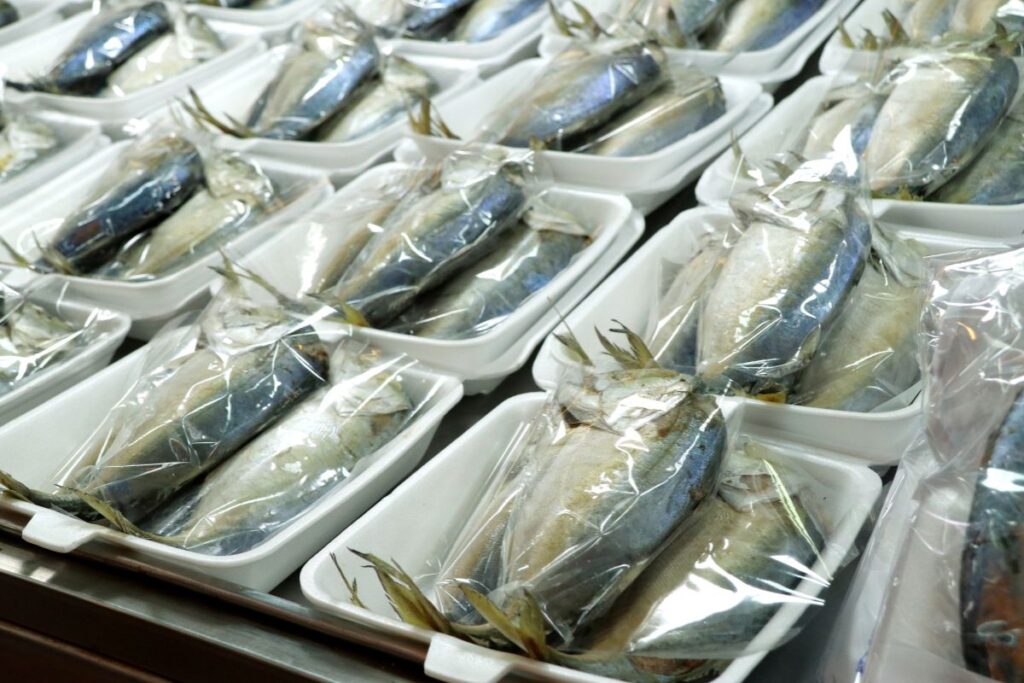
This can be challenging because seafood packaging must perform well. A material that looks more sustainable may not be suitable if it shortens shelf life, increases spoilage or fails during transport. The environmental impact of wasted food can be significant, so packaging decisions need to balance material reduction with product protection.
More sustainable packaging is often about better design, not simply using less. Lightweighting, recyclable formats, responsible material sourcing and improved pack efficiency can all contribute to progress.
Packaging Also Supports Brand Trust
Packaging is often the first thing a customer sees. It communicates freshness, quality, origin, preparation guidance and brand identity. In retail settings, clear and well-designed packaging can help shoppers understand what they are buying and how to use it.
For seafood, this is especially useful because some consumers feel unsure about storage, cooking or portion sizes. Helpful packaging can reduce uncertainty by offering clear cooking instructions, serving suggestions, allergen information and storage guidance.
Strong packaging should feel practical rather than overcomplicated. It needs to protect the product, inform the buyer and support confidence at the point of purchase.
Efficiency Matters Across the Supply Chain
Packaging affects more than the customer experience. It also influences transport, storage, stacking, handling and cost. Poorly designed packaging can waste space, slow down packing lines, increase damage or make logistics less efficient.
For large-scale seafood suppliers, consistency is essential. Packaging needs to perform reliably across production batches and distribution routes. It should suit automated processes where required, protect the product during movement and meet the expectations of retailers or foodservice buyers.
The best seafood packaging is designed around the full journey of the product. It considers safety, shelf life, logistics, sustainability and customer usability together.
Effective seafood packaging is not just a container. It is part of the product’s quality system. When packaging is well designed, it helps protect freshness, reduce waste, support responsible supply chains and give customers greater confidence in the seafood they choose.
Comments are closed.