


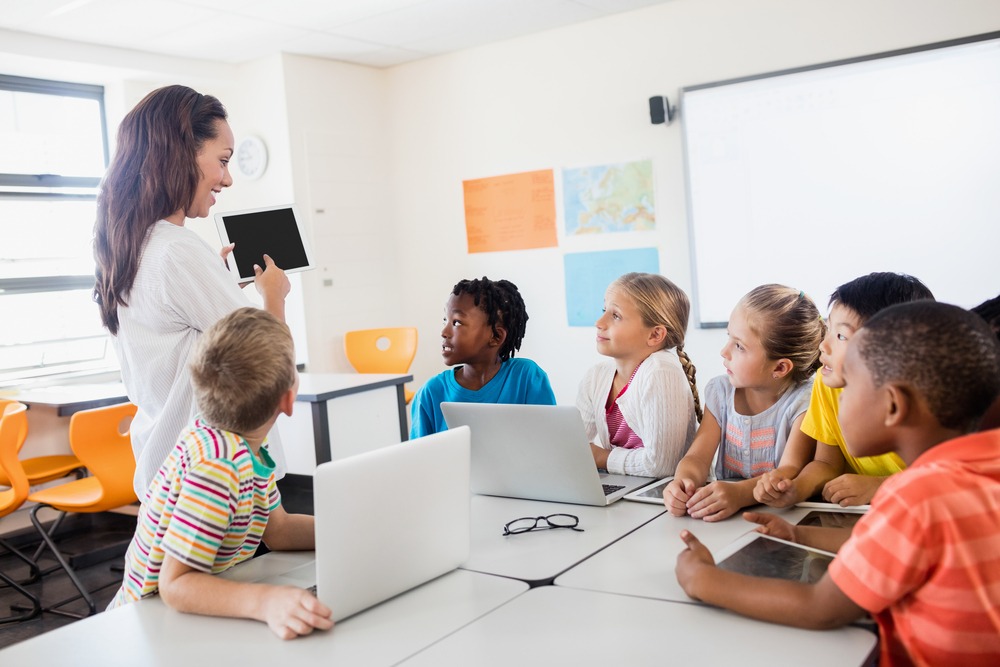
The physical landscape of the contemporary classroom has evolved significantly over the past few decades. The traditional environment characterized by static chalkboards, heavy paper textbooks, and rows of uniform wooden desks has given way to an ecosystem driven by digital connectivity. Today, interactive flat panels, personal laptops, cloud-based learning management platforms, and adaptive software programs are standard fixtures in schools across the United States.
This digital transition represents far more than an aesthetic or logistical upgrade. The integration of modern technology into the educational framework has fundamentally altered the mechanics of teaching, learning, and academic administration. Technology is no longer an isolated subject taught during a weekly computer lab session; it is the infrastructure through which daily instruction is designed, delivered, and evaluated. When implemented with deliberate pedagogical intent, digital tools enhance equity, cultivate essential modern workforce skills, and maximize individual student engagement.
Democratizing Information and Expanding Resources
Historically, the scope of a student’s education was structurally limited by the physical boundaries of their school building. The quality of a research project depended heavily on the specific volumes available in the school library, and the currency of a science lesson relied on the publication date of a printed textbook.
Modern technology has effectively dismantled these geographic and financial barriers to information. With an internet connection and a digital device, students gain immediate access to the collective knowledge of humanity. They can explore digitized historical archives, read peer-reviewed scientific journals, and analyze real-time global data streams.
This democratization of resources changes the fundamental role of the educator. Teachers are no longer required to act as the sole source of information in the room. Instead, they function as instructional facilitators and critical-thinking coaches, guiding students through the complex process of evaluating online sources, distinguishing fact from misinformation, and synthesising diverse perspectives into cohesive arguments.
Personalized Learning Through Adaptive Software
One of the greatest systemic challenges in traditional education is the inherent diversity of student learning velocities within a single classroom. In a standard lecture model, a teacher must pitch instruction toward the statistical average of the room. Consequently, students who master a concept quickly become bored and disengaged, while students who require additional time fall behind, creating cumulative learning gaps.
Digital connectivity and data analytics have introduced the capability for true personalization at scale. Adaptive learning platforms utilize complex algorithms to analyze a student’s responses in real-time, mapping their conceptual strengths and cognitive bottlenecks.
These intelligent systems modify the educational journey dynamically:
-
Customized Pacing: If a student demonstrates immediate mastery of a mathematical concept, the software automatically advances them to more complex problem sets, preventing intellectual stagnation.
-
Targeted Remediation: When a student struggles with a specific reading comprehension variable, the platform flags the deficiency and delivers targeted, micro-lessons and foundational practice problems to bridge the gap.
-
Differentiated Content Formats: Platforms can adjust how information is presented based on user interaction data, offering a blend of textual explanations, video tutorials, and interactive simulations to suit different cognitive preferences.
This diagnostic precision ensures that every student operates continuously within their optimal zone of proximal development, maximizing learning efficiency without overwhelming their capacity.
Shifting from Passive Consumption to Active Creation
In traditional educational models, students spent a disproportionate amount of time acting as passive consumers of information. They listened to lectures, copied notes from a board, and completed repetitive worksheets. While these methods build a baseline of memorized facts, they rarely cultivate higher-order cognitive skills like synthesis, evaluation, and design.
Modern educational technology shifts the balance from passive consumption to active, creative production. Affordable digital toolsets allow students to transform their theoretical knowledge into tangible, multi-media artifacts of learning.
Instead of writing a standard book report, students can write, edit, and produce an original podcast episode detailing a historical event. They can utilize 3D computer-aided design software to model architectural solutions for environmental challenges, write code to simulate physical experiments, or build interactive websites to present sociological research. This hands-on creation process forces students to engage deeply with the underlying subject matter, cement abstract concepts into long-term memory, and build an authentic portfolio of technical competencies.
Streamlining Administrative Workflows and Data-Driven Instruction
The impact of technology extends far past student-facing applications; it has completely transformed the operational efficacy of educators. Administrative burdens, such as manual grading, attendance tracking, and physical paperwork management, historically consumed countless hours that could have been dedicated to direct student mentorship or lesson optimization.
Modern learning management systems automate these routine administrative workflows seamlessly. Digital assessment tools provide instant evaluation for objective tests and quizzes, giving students immediate feedback while compiling comprehensive data dashboards for the instructor.
With these data insights, teachers can practice precise, data-driven instruction. Before stepping into the classroom each morning, an educator can review a dashboard detailing exactly which homework problems caused the most friction the previous evening. They can instantly identify specific subgroups of students who require small-group intervention, modify their lecture focus to address common misconceptions, and track longitudinal progress against state educational standards with absolute mathematical clarity.
Cultivating Collaboration and Global Perspectives
The modern professional arena requires individuals to work fluidly across geographical boundaries, utilizing digital tools to collaborate within diverse, distributed teams. Integrating collaborative technology into the classroom ensures that students develop these interpersonal and digital literacies long before they enter the workforce.
Cloud-based document sharing platforms allow students to co-author research papers, build presentations, and analyze data sets simultaneously, regardless of whether they are sitting at the same library table or working from their respective homes.
Furthermore, technology has expanded the concept of the classroom community to a global scale. Through video conferencing platforms and collaborative international projects, a classroom in the United States can partner with a peer classroom in South America, Europe, or Asia. Students can engage in direct cross-cultural dialogues, collaborate on global environmental data collection, and gain firsthand perspectives on international issues, transforming abstract geography lessons into empathetic, real-world human connections.
Frequently Asked Questions
How do schools prevent digital distractions when students use personal devices in class?
Managing digital distraction requires a combination of robust network infrastructure and proactive classroom management strategies. Schools utilize centralized mobile device management software that allows teachers to monitor student screens in real-time, lock devices into specific applications during instruction, and block access to non-educational websites or social media networks. More importantly, effective educators structure lessons so that devices are used for active creation and problem-solving rather than passive browsing, keeping students naturally engaged in the academic task.
Does the heavy use of technology in the classroom negatively impact handwriting and manual fine motor skills?
While keyboarding and digital navigation are critical contemporary literacies, they are not intended to completely replace manual motor skills. Balanced educational curriculums continue to emphasize physical handwriting, sketching, and hands-on laboratory work, particularly in early childhood development. Technology is utilized as a complementary tool that expands learning capabilities rather than an exclusive medium that erodes foundational physical competencies.
How does educational technology accommodate students with special needs or learning disabilities?
Technology is an incredibly powerful equalizer for exceptional learners through assistive digital features. Visually impaired students utilize real-time text-to-speech software and dynamic screen magnification, while students with auditory processing challenges benefit from automated closed captioning and visual transcriptions. Additionally, speech-to-text tools allow students with physical dysgraphia or severe writing anxiety to voice their thoughts directly onto the digital page, ensuring their actual intellectual capacity is accurately assessed.
What is the digital divide and how do modern school districts address it?
The digital divide refers to the economic disparity between students who have robust access to high-speed internet and modern computing hardware at home and those who do not. To combat this equity challenge, many school districts implement one-to-one device initiatives, providing every enrolled student with a dedicated laptop or tablet. Additionally, districts partner with community organizations or utilize federal funding to distribute mobile internet hotspots to families lacking reliable home connectivity, ensuring all students can access digital learning materials outside school hours.
How do modern classroom technologies handle student data privacy and security?
Student data protection is strictly governed by federal regulations, specifically the Family Educational Rights and Privacy Act and the Children’s Online Privacy Protection Act. School districts must vet all software vendors to ensure compliance with these laws. Approved educational applications operate within secure, closed ecosystems that explicitly prohibit the tracking, profiling, or commercial targeting of minors, ensuring that student academic performance data and personal details remain confidential and secure.
Can technology completely replace the role of a physical teacher in the future?
No, technology is designed to enhance the capabilities of a human teacher, not replace them. While software can effectively deliver structured content and analyze numerical performance data, it lacks the capacity for emotional intelligence, empathy, situational intuition, and cultural responsiveness. The core of effective education is a strong mentor-student relationship. Technology serves as an exceptional amplifier, freeing teachers from administrative tasks so they can focus on providing deeply human guidance, inspiration, and psychological support.
Comments are closed.